

 EN

Kaixin, une entreprise de haute technologie spécialisée dans la R&D, la production et la vente de vannes de pipeline en polymère.
Flow Control Notes · Kaixin Pipeline Technologies
PVC Check Valves: The Quiet Guardians of Corrosive Process Lines
A practical, field-tested look at how plastic check valves actually behave, how to choose between swing, ball and vertical designs, and where a small, unglamorous component quietly saves a plant from a very expensive afternoon.
What a PVC Check Valve Actually Does
A check valve makes the simplest promise in any piping system: the flow goes one way, and it does not come back. In a plastic line carrying hydrochloric acid, sodium hypochlorite or a hot plating bath, that promise is worth a great deal. It keeps a pump from running backwards, stops a storage tank from draining itself into a process line, prevents a dosing skid from siphoning, and keeps a contaminated stream from drifting into a clean one.
There is no handle and no actuator. A disc — a swinging flap, a ball, a lift plate — is pushed open by the moving fluid and settles back onto its seat the moment the flow stops or reverses. Almost every decision you will make about a plastic check valve comes down to how that disc behaves at your flow rate, at your pressure, and with your particular medium.
A check valve is not a control valve. It is a one-way promise — and like any promise, it only holds when the conditions around it are honest.
The mechanics are worth understanding before you buy. Our engineers have written a plain-language walkthrough of how a check valve prevents backflow in a pipeline, which pairs well with the selection notes below.
Why Plastic Bodies Make Sense in Corrosive Service
In acid, alkali and hypochlorite duty, a metal check valve is often the first component to fail — and the last one anyone wants to repair. A thermoplastic body removes that entire category of problem. It does not rust, it does not pit, and it does not quietly release iron ions into a process stream that a customer is paying to keep clean.
The choice within the plastic family matters just as much as the decision to use plastic at all. Temperature tolerance and chemical compatibility vary considerably from one polymer to the next, and the difference is often what separates a valve that lasts a decade from one that swells in a season.
| Body material | Practical temperature range | Chemical sweet spot | Where we see it most |
|---|---|---|---|
| PVC-U (UPVC) | up to about 60 °C | dilute acids, alkalis, plating baths | water treatment, plating lines |
| CPVC | up to about 95 °C | hot corrosive liquids, hypochlorite | chlorine dosing, hot effluent |
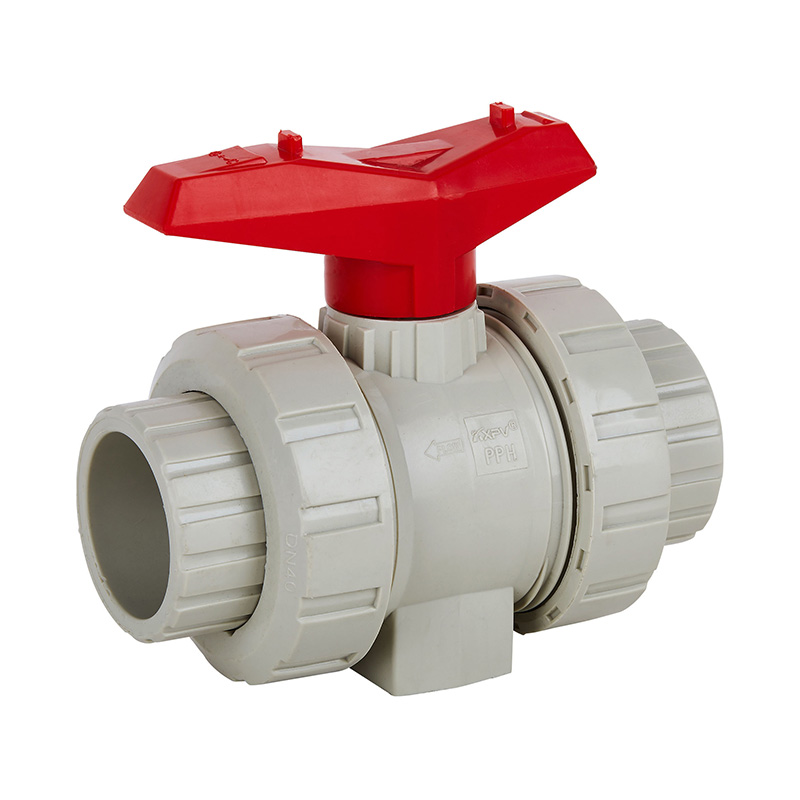
| PPH | up to about 90–100 °C | aggressive acids, high-purity work | chemical process, pickling |
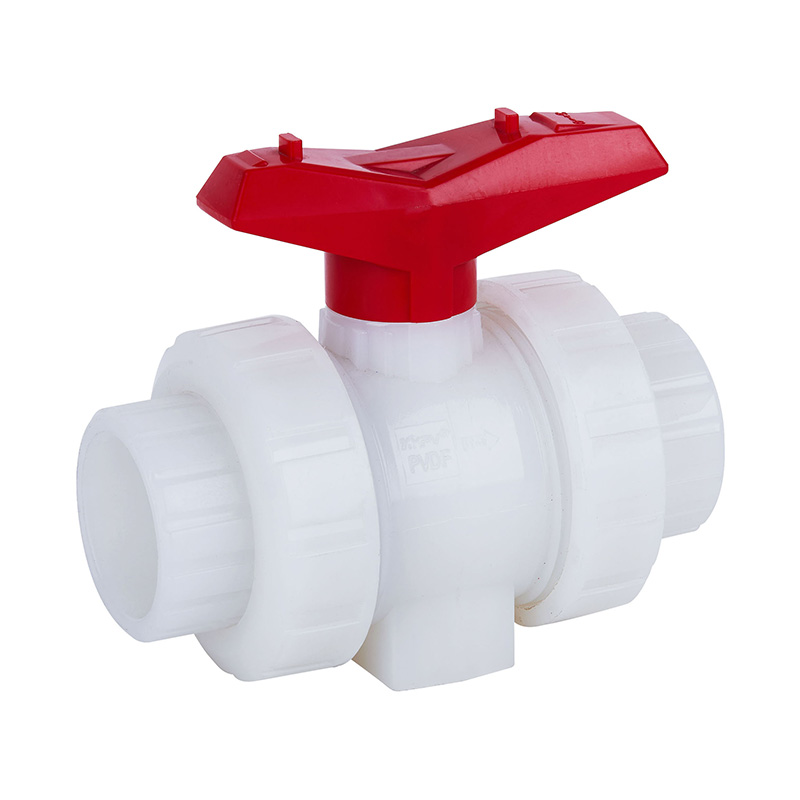
| PVDF | up to about 140 °C | solvents, halogens, fine chemicals | pharmaceutical and fine chemical |
| FRPP | up to about 90 °C | cost-effective acid service | large-bore effluent headers |
The body is only half of the sealing story. The disc and the seat gasket decide how long the valve stays tight, and the elastomer choice — EPDM for many aqueous chemicals, FKM for more aggressive or hotter duty — deserves the same attention as the body material itself.
Swing, Ball, Vertical: Choosing the Right Body Style
Swing check valves
A hinged disc swings out of the flow path and drops back onto an angled seat. Pressure drop is low, the bore is close to full, and the design is forgiving of dirty media because there is very little inside the body to clog. Swing valves are happiest in horizontal lines with steady flow. In pulsating service they can chatter, and on sudden shutdown they can close with a bang that the pipework remembers.
Ball check valves
A sphere seats against a machined ring, sometimes assisted by a light spring. Ball valves work in both horizontal and vertical lines, tolerate faster closing, and are a good answer where flow is intermittent. The trade-off is a slightly higher cracking pressure and a seat that prefers reasonably clean fluid.
Vertical and lift check valves
These are built for upward flow in vertical pipework, typically right after a pump or at the foot of a riser. The disc lifts off its seat and drops back with gravity assisting, so orientation is not optional — it is the design premise. Install one sideways and it will never seal properly, no matter how carefully it was made.
- Horizontal line, steady flow, some debris: swing.
- Vertical line, upward flow: vertical or lift.
- Intermittent or pulsating flow: ball.
- Tight space between a flange pair: wafer-style swing.
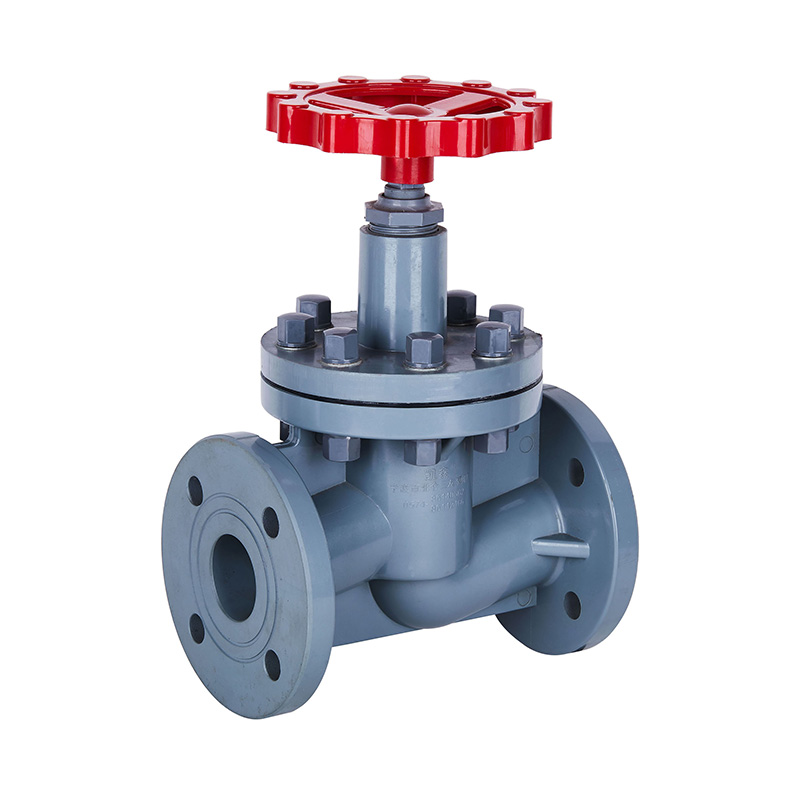
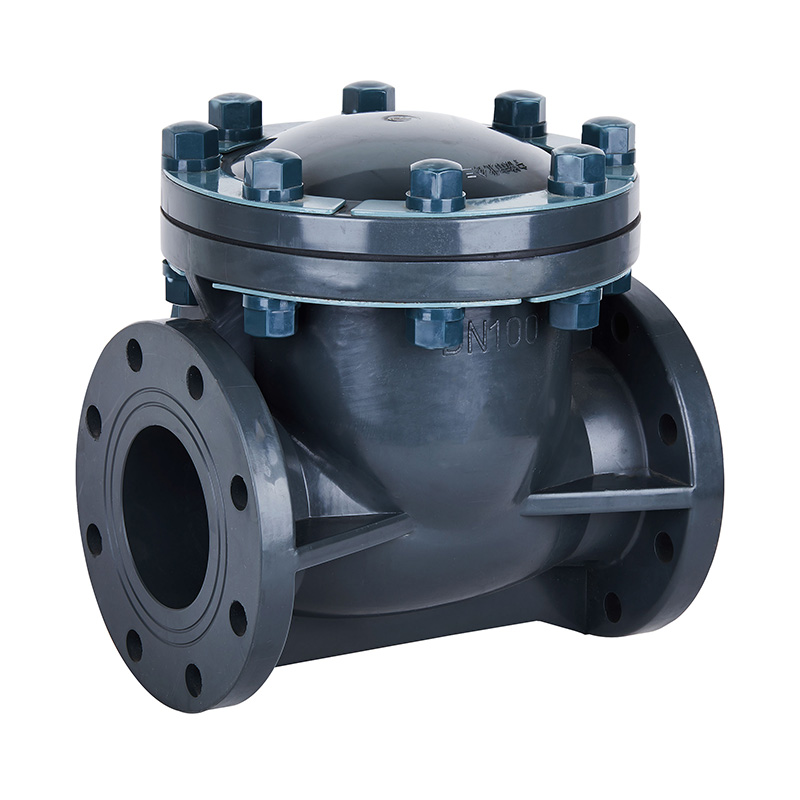 PVC-U H44F-10U Swing Check Valve for Vertical PipeworkFor upward-flow vertical lines, this PVC-U swing check valve offers acid resistance and removable-body maintenance; check orientation and installation details before selecting.View Product →
A Selection Sequence That Rarely Goes Wrong
When a customer calls with a backflow problem, we usually work through the same six questions in the same order. It takes about ten minutes and prevents most of the returns we would otherwise see.
- Confirm the medium, its concentration, and whether it carries solids or crystals.
- Confirm the working temperature, including flush or cleaning cycles that run hotter than normal operation.
- Note the flow rate and target velocity; most plastic lines are comfortable at roughly 1–2 m/s.
- Check the pressure class and the piping standard — GB, ANSI/ASTM and JIS flange and socket dimensions are not interchangeable.
- Confirm installation orientation and available space before committing to a body style.
- Leave yourself access for inspection; a check valve that cannot be opened is a check valve that gets replaced whole.
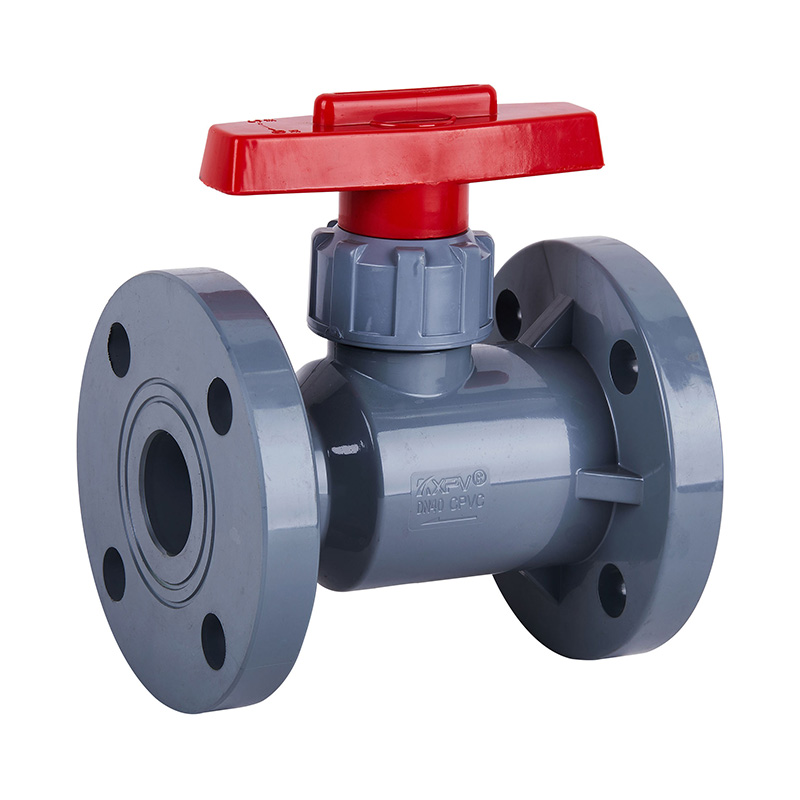
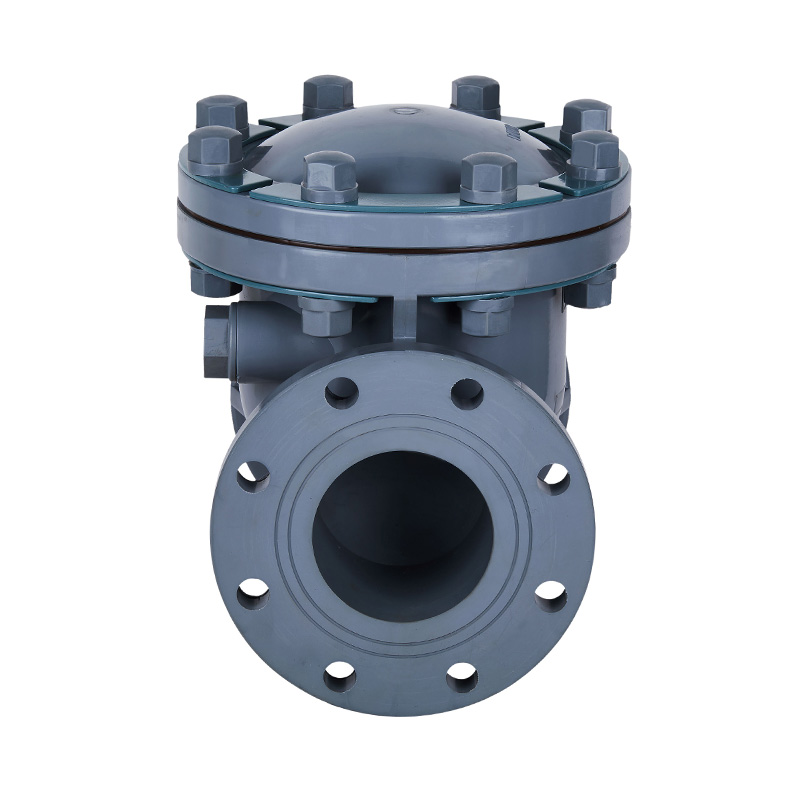 PVC-C H44F-10V Swing Check Valve for Corrosive MediaGrey all-plastic swing check valve for acidic and corrosive service, with lower flow resistance and accessible inspection; review installation habits to avoid backflow complaints.View Product →
Installation Details That Decide Performance
Most of the check valve complaints we hear turn out to be installation stories rather than product stories. A handful of habits prevents nearly all of them.
- Match the flow arrow on the body to the real direction of flow — this sounds trivial and is missed surprisingly often.
- Support the valve and the adjacent pipe; a filled plastic line should not hang its weight on a valve body.
- Let solvent-cement joints cure fully before pressurising. A rushed joint leaks, and the valve usually gets the blame.
- Allow room for thermal expansion, especially in CPVC and PPH lines that see warm service.
- Keep the valve away from the lowest point of a dirty line, where scale and debris collect.
Cracking pressure, briefly. This is the inlet pressure needed to open the disc. Swing valves open at very low values; spring-assisted ball valves need noticeably more. In gravity-fed or low-head lines, that single number decides whether the valve works at all.
Watch for water hammer. A check valve closing against a fast-reversing flow can generate a pressure spike several times the line pressure. If your pump stops abruptly, consider a slower-closing style or a damped arrangement rather than simply a bigger valve.
Where PVC Check Valves Earn Their Keep
In our experience a small number of locations account for most plastic check valve installations, and each one has its own quirks.
- Pump discharge lines, to stop the impeller spinning backwards when a pump stops.
- Chemical dosing and metering skids, to prevent siphoning back into a day tank.
- Tank fill and transfer lines, to keep a stored chemical where it belongs.
- Plating and surface-treatment baths, where the medium is both corrosive and warm.
- Effluent and scrubber recirculation loops, where debris tolerance matters more than a perfect seal.
Hot, aggressive duty in fine chemical or high-purity service often pushes the choice towards PVDF, which holds its shape and its seal at temperatures that would soften PVC-U. It costs more per valve and considerably less per shutdown.
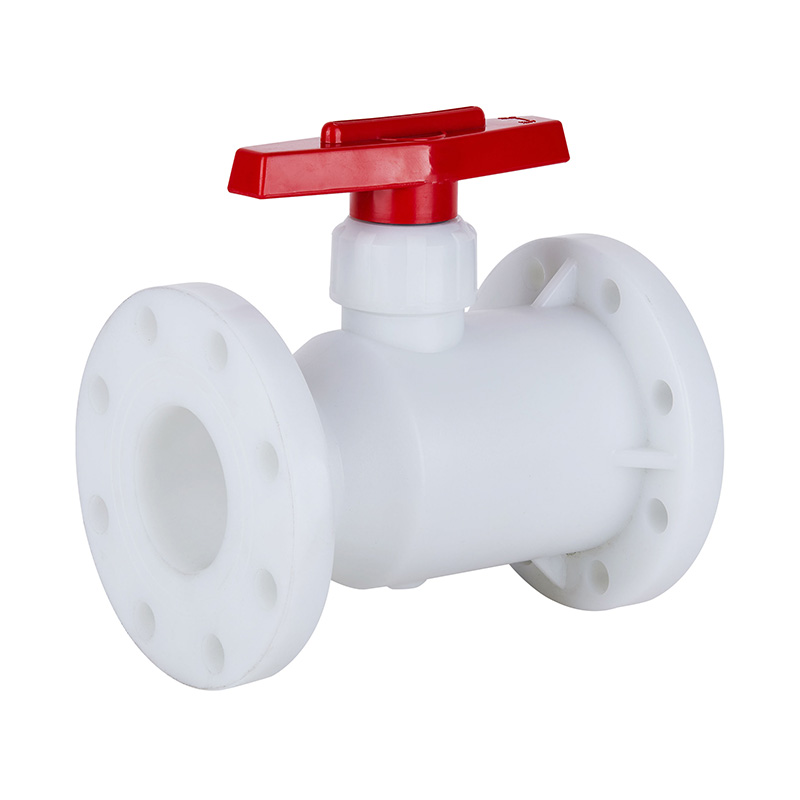
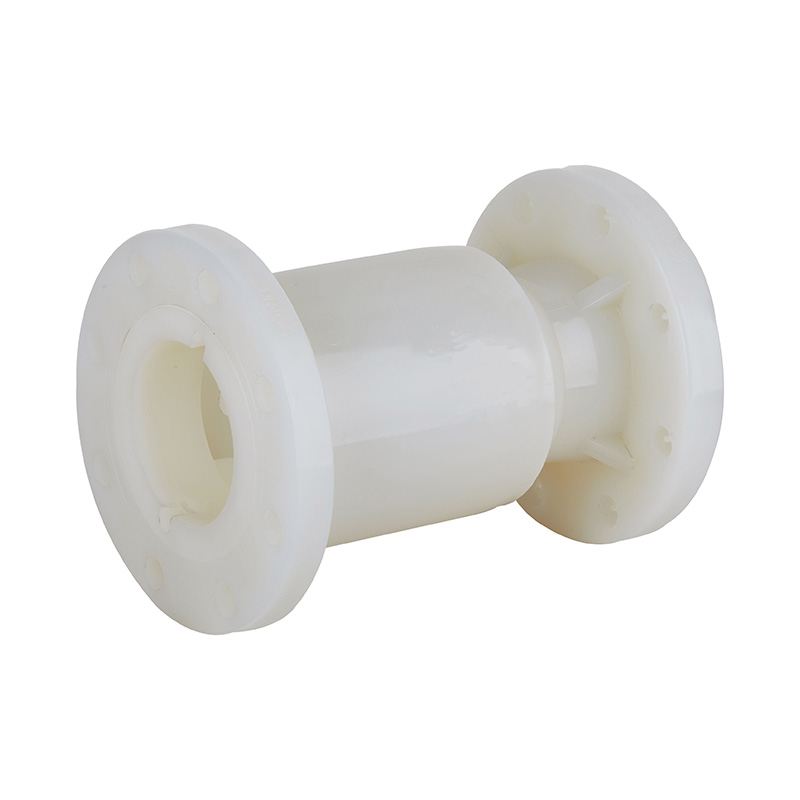 PVDF H41F-10F Vertical Ball Check Valve for Hot Acid MediaWhite PVDF ball check valve for medium-temperature acid service, offering corrosion resistance and low pressure loss where hot aggressive duty needs higher temperature capability.View Product →
Keeping Them Healthy Without Dismantling the Line
A check valve has no operator, so it tends to be forgotten until something goes wrong. A short annual routine is usually enough to catch problems while they are still cheap.
- Watch for a falling flow rate or a pump that starts spinning backwards; both point to a worn or fouled seat.
- Isolate and open the valve at the union or flange, then inspect the disc for scale, swelling or embedded particles.
- Replace the seat gasket whenever the valve is opened; gaskets are inexpensive and reusing a compressed one is false economy.
- Check that the pipe has not shifted and altered the valve's orientation over time.
A habit worth copying. Keep one spare valve and a set of gaskets for every size on site. In a plant running several grades of chemical, that spare is what turns a shutdown into a fifteen-minute job.
Never use a PVC or CPVC check valve on compressed air or gas. Thermoplastic bodies are rated for liquid service; a gas release can shatter the body and throw fragments at speed. Always check the pressure-temperature rating for the actual application rather than relying on line size alone.
Sourcing the Whole Line, Not Just the Valve
A check valve rarely travels alone. It sits between a pipe, two flanges or sockets, a gasket, and often a pump. When those parts come from different suppliers, the person who has to make them fit is usually the maintenance team — at two in the morning.
Our team at Kaixin Pipeline Technologies has been manufacturing non-metallic corrosion-resistant piping since 1999: plastic valves, pipe, fittings and corrosion-resistant pumps in PVC-U, CPVC, PVDF, PPH and FRPP. Standard sizes run from DN15 to DN600, with pipe and fittings produced up to DN800 and butterfly valves up to DN1000. Production follows GB, ANSI/ASTM and JIS standards, and custom sizes or special materials are part of a normal conversation rather than a special favour.
That breadth matters most on projects where a check valve, a magnetic-drive pump and a run of flanged pipe all have to arrive compatible. It is far easier to ask one technical team why a seat is failing than to mediate between three.
PVC check valves are quiet components, and quiet is exactly what you want from them. Choose the body material for the medium and the temperature, choose the style for the orientation and the flow, install it with the same care you would give a pump, and then leave it alone.
When a check valve does its job, nobody notices. That is the whole point.

 Siège social : No. 539 Bohai Road, district de Beilun, ville de Ningbo, province du Zhejiang, République populaire de Chine

 +86-18067123177
