

 EN
EN
Kaixin, une entreprise de haute technologie spécialisée dans la R&D, la production et la vente de vannes de pipeline en polymère.
The process engineer specifying a replacement line for hot hydrochloric acid at 85°C will quickly discover that CPVC is both a sensible candidate and a material that punishes assumptions. The same CPVC pipe that carries 400 psi at room temperature may be rated below 100 psi at 180°F, and the exact number depends on diameter, wall thickness, and how long the load lasts. The practical conclusion comes first: never treat the CPVC temperature and pressure rating as a single value. It is a curve, and every component in the system (pipe, fitting, joint, valve) has to be checked against that same curve.
Where CPVC Temperature and Pressure Ratings Come From
CPVC pressure ratings are built from long-term hydrostatic testing, not from short-term burst tests. Pressurized samples are held at a fixed temperature until failure, and the test is repeated at several stress levels to build a stress-rupture curve. The stress that corresponds to a 100,000-hour life, roughly 11.4 years, becomes the long-term hydrostatic strength for that temperature.
At 73°F (23°C), standard CPVC compounds used for pressure piping have a long-term hydrostatic design basis around 4000 psi. At 180°F (82°C), the same compound is rated near 1000 psi. Before that value reaches a published pressure table, it is divided by a safety factor, typically 2:1, to cover manufacturing tolerances, installation variables, and creep-test scatter. This is why a common CPVC tubing rating of 400 psi at 73°F and 100 psi at 180°F works out precisely: a design stress of 2000 psi at 73°F, 500 psi at 180°F, divided by the SDR geometry of the tube.
The derivation matters in the field. If a supplier quotes a pressure rating without stating the temperature, the governing standard, or the safety factor, the number is not a usable specification. Ask for the test basis behind the table.
How Temperature Lowers the Working Pressure
Heat attacks CPVC in two ways. First, the polymer creeps faster under sustained load as it approaches its upper service range, so the same hoop stress produces more time-dependent deformation and leads to ductile rupture sooner. Second, chemical resistance is itself temperature dependent. A hot acid that CPVC handles comfortably at 80°C may start attacking the material at 95°C, even though the mechanical rating alone would still appear acceptable.
The practical effect shows up in every rating table. A 1-inch Schedule 80 CPVC pipe has a nominal water pressure rating near 630 psi at 73°F. At 180°F, the same pipe drops to about 160 psi. That is a 75 percent reduction, and the curve is steepest between 140°F and 200°F.
CPVC remains suitable for pressure service up to about 200°F (93°C), and up to roughly 220°F in non-pressurized drainage or vent service. Above that, the safety margin becomes too thin for reliable containment. This is exactly where CPVC separates from ordinary PVC: uPVC is normally limited to about 140°F for pressure applications. If a process runs at 150°F with, say, 80 psi, uPVC is not a candidate and CPVC still is, provided the correct schedule is chosen and the actual rating verified.
Reading a CPVC Pressure and Temperature Rating Table
Rating tables look dry until you use them to size a line. The table below shows representative values for CPVC Schedule 80 pipe in water service at two temperatures.
| Nominal Size | Rated Pressure at 73°F (23°C) | Rated Pressure at 180°F (82°C) |
|---|---|---|
| 1/2 inch | ~850 psi | ~210 psi |
| 1 inch | ~630 psi | ~160 psi |
| 2 inch | ~400 psi | ~100 psi |
| 4 inch | ~320 psi | ~80 psi |
Three observations matter when you use this table:
- Larger sizes are rated lower at the same temperature because hoop stress grows with diameter.
- The temperature penalty is roughly the same across all sizes, so never apply a flat percentage correction to one size only.
- Schedule 80 buys a thicker wall and a proportionally higher rating, but it cannot compensate for exceeding the material's 200°F ceiling.
If a size you need is not in the table, the calculation is a standard hoop-stress formula: P = 2St / (D - t), where P is rated pressure, S is the hydrostatic design stress (2000 psi at 73°F or 500 psi at 180°F for CPVC with the 2:1 factor), t is wall thickness, and D is outside diameter. The same formula sits behind ASTM D1785, ASTM D2846, and ASTM F441 pressure tables.
One field caution: published tables apply to clean water at the listed temperature. Process chemicals frequently lower the rating further through environmental stress cracking, oxidation, or plasticizer extraction. For any fluid other than water, apply the chemical resistance data before accepting the mechanical rating. Vacuum service deserves a separate check, because collapse pressure also drops as temperature rises; a line that holds a few psi of internal rating may still buckle under full vacuum at 180°F.
The System Rating Is the Weakest Link
Piping systems fail at the weakest component, and in a CPVC system that is usually a fitting, a joint, or a valve. Socket-fused joints depend on a thin solvent-bond zone that softens sooner than the parent pipe at high temperature. Many manufacturers derate socket fittings relative to the pipe, which is why flanged or double-union configurations are common in hot service: the mechanical seal does not rely on the solvent bond.
Temperature also creates problems that a static pressure rating misses. A line that runs at 160°F with the pump operating may cool to 70°F at night; the contraction squeezes the fluid and can generate transient pressure spikes above the pump shutoff head. Repeated thermal expansion and contraction also works on flanged joints and valve seals. The fix is to design for the transient: add expansion loops, space hangers so the pipe moves without binding, and check how thermal cycling affects CPVC valve sealing before you lock in a valve style.
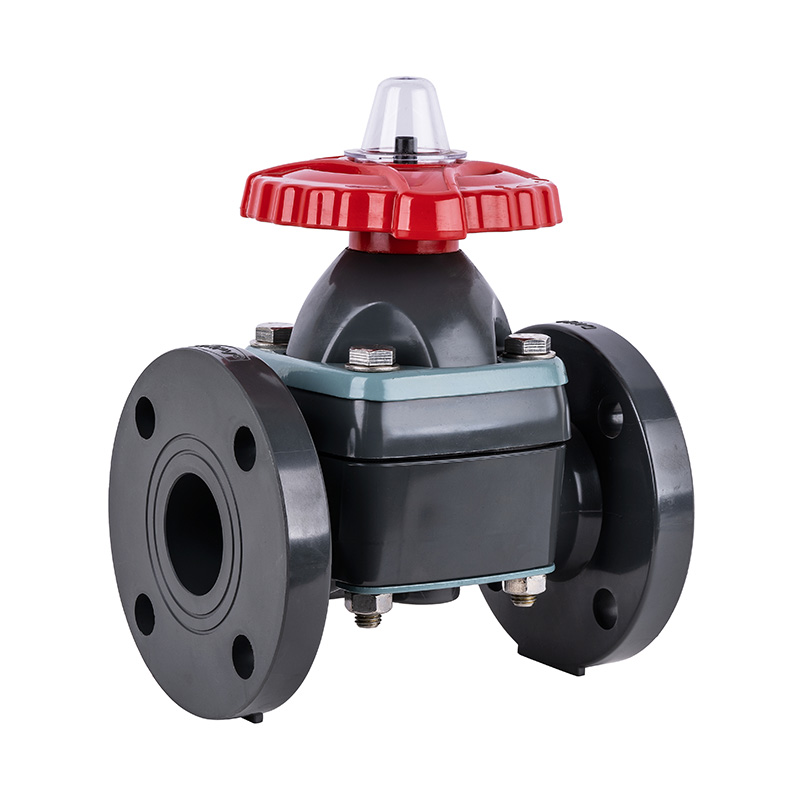
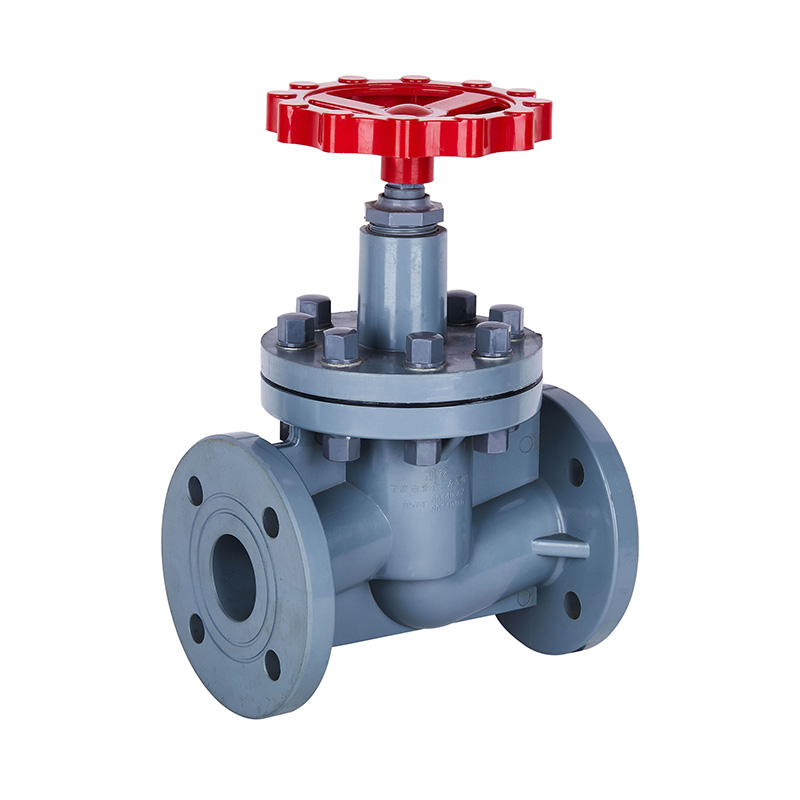
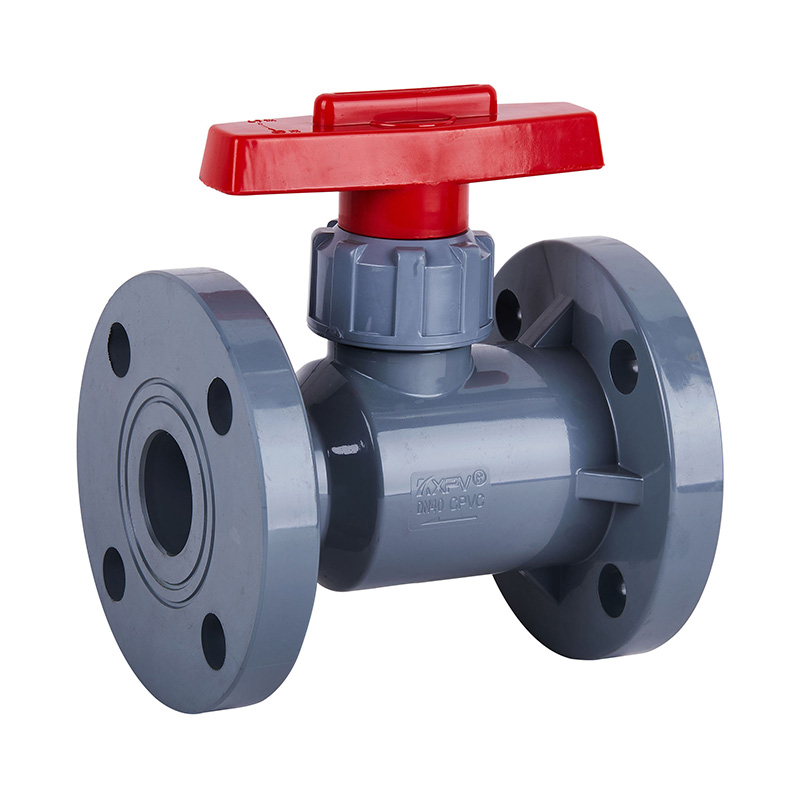
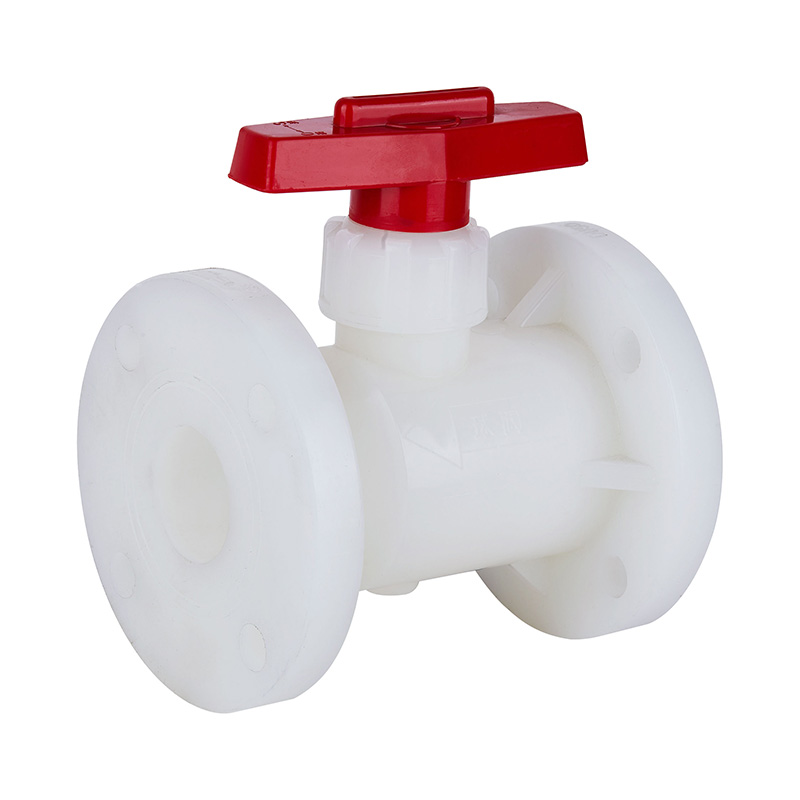
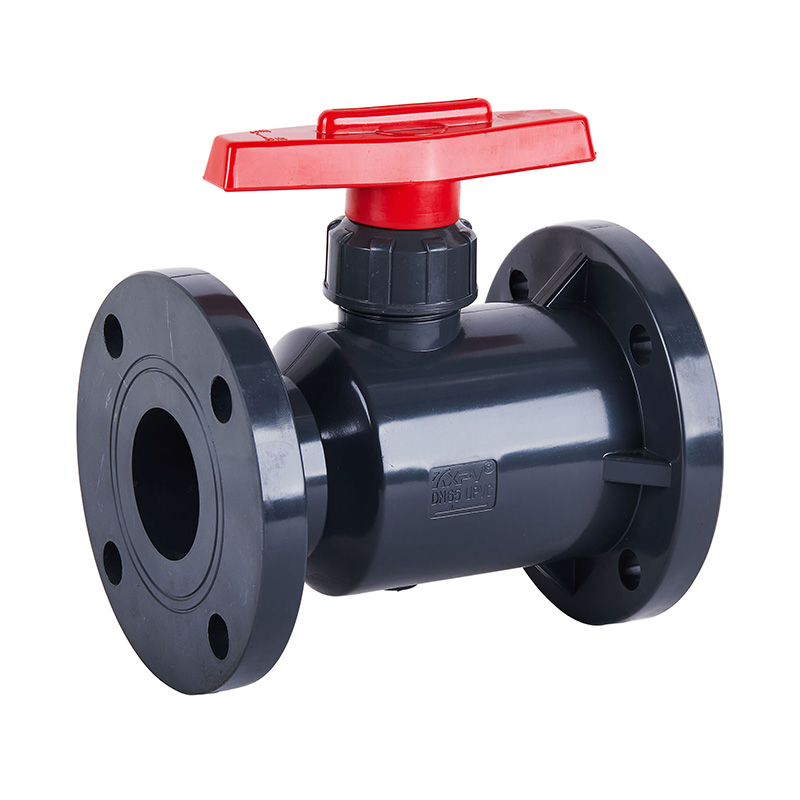
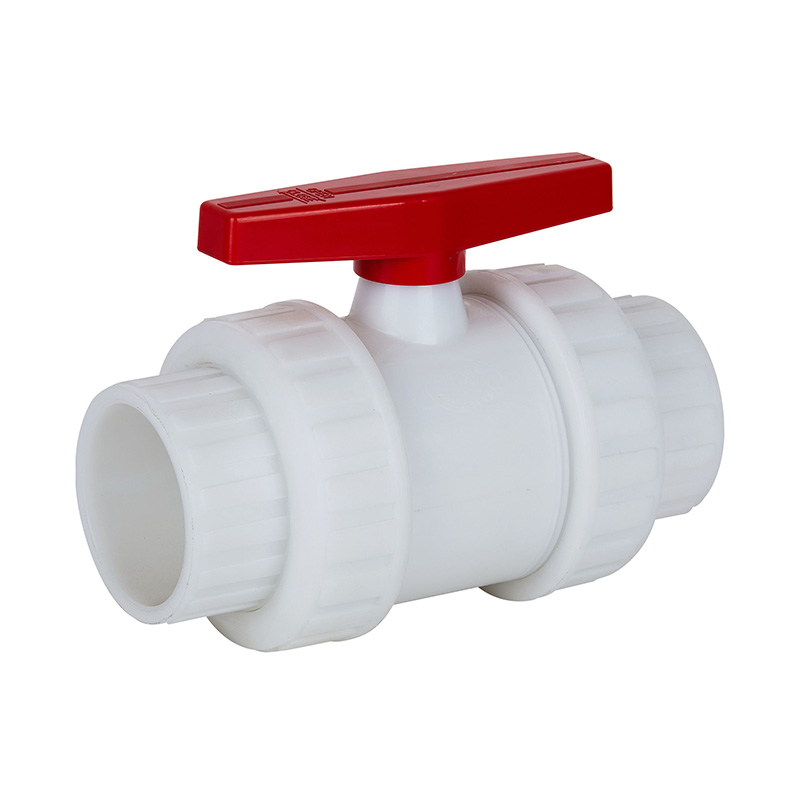
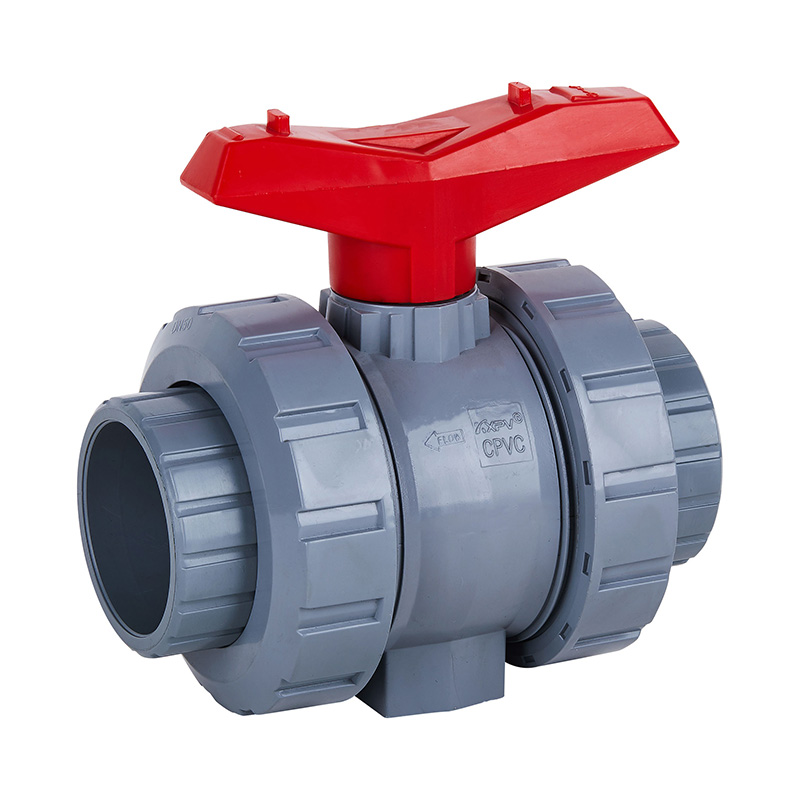
Valves deserve particular attention because their pressure-temperature curve is often lower than the pipe's. Ball valves and butterfly valves rely on elastomer seals, while globe and diaphragm designs give better throttling behavior when flow control creates localized heating. For a flanged system where the valve must hold the same rating as the line, a CPVC flange double-union ball valve avoids the solvent-welded socket at the connection and simplifies maintenance at the same time. When the duty requires finer, more predictable flow adjustment, a CPVC flange-type globe valve keeps wetted materials consistent with the piping while giving the operator a clearer throttling characteristic.
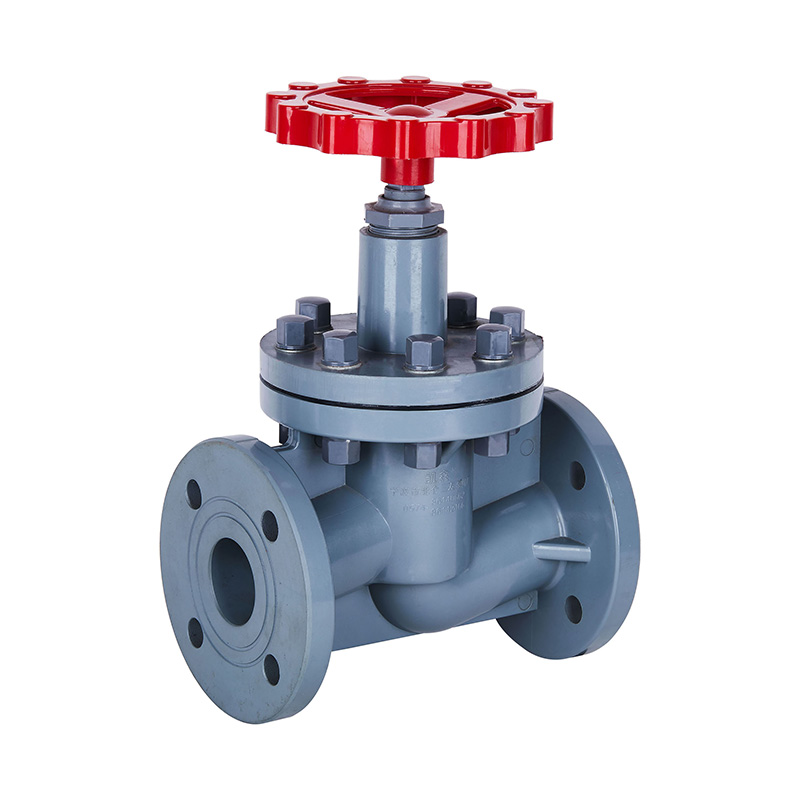 Wholesale PVC-C J41F-10V Flange Type Globe Valve DN15-150 1/2'-6' ANSI Standard Kaixin Pipeline Technologies Co., Ltd is China wholesale industrial/household PVC-C J41F-10V Flange Type Globe Valve DN15-150 1/2'-6' ANS... View Product →
 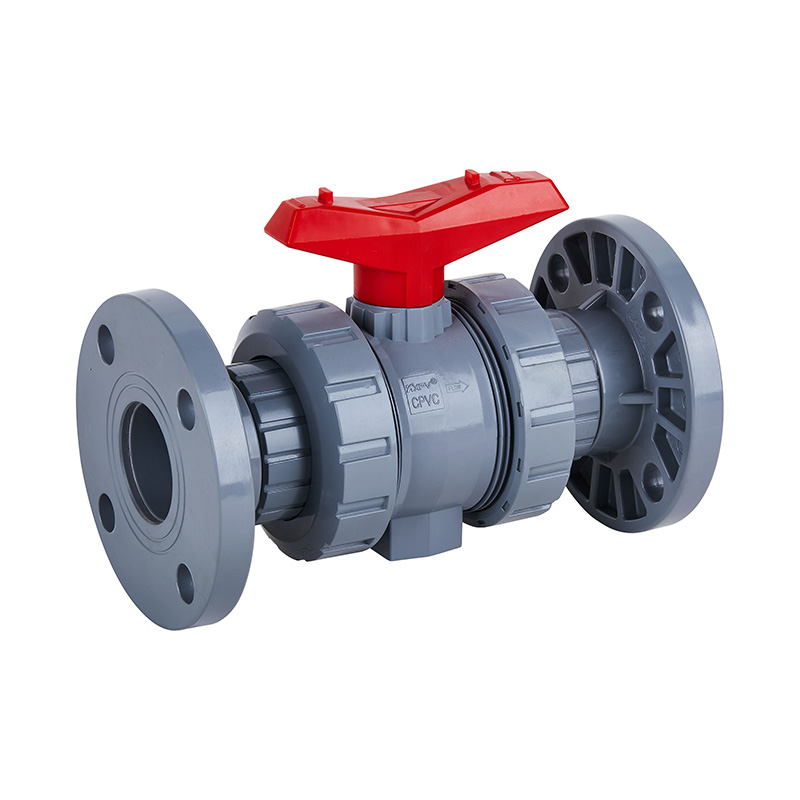 Wholesale PVC-C Q41F-10V Flanged Double Union Ball Valve DN15-100 GB Standard Su Kaixin Pipeline Technologies Co., Ltd is China wholesale industrial/household PVC-C Q41F-10V Flanged Double Union Ball Valve DN15-100 GB ... View Product →
 What to Verify Before You Specify CPVC
By now the pattern is clear: the material's name alone tells you almost nothing about its allowable pressure. The rating is defined jointly by temperature, size, schedule, standard, safety factor, and chemical environment. Before a specification is issued, check these points:
- Confirm the governing standard: ASTM F441 for Schedule 40 and 80 pipe, ASTM D2846 for CTS tubing, or the relevant GB standard for systems built to Chinese specifications.
- Verify the rating at maximum operating temperature plus surge allowance, not at average temperature.
- Apply chemical derating factors when the fluid is not clean water.
- Check the pressure class of the fittings and valves; the pipe is rarely the limiting component.
- Ask the supplier to state the design factor and the test basis behind its table.
On the sourcing side, request a full pressure-temperature table for the exact size and schedule under consideration. A documented table has more value than a general claim about high-temperature performance. When assembling a complete line, a GB-standard CPVC pipe with its matching fittings and flanges from the same production line keeps the design assumptions consistent, so the final rating is not a patchwork of incompatible data.
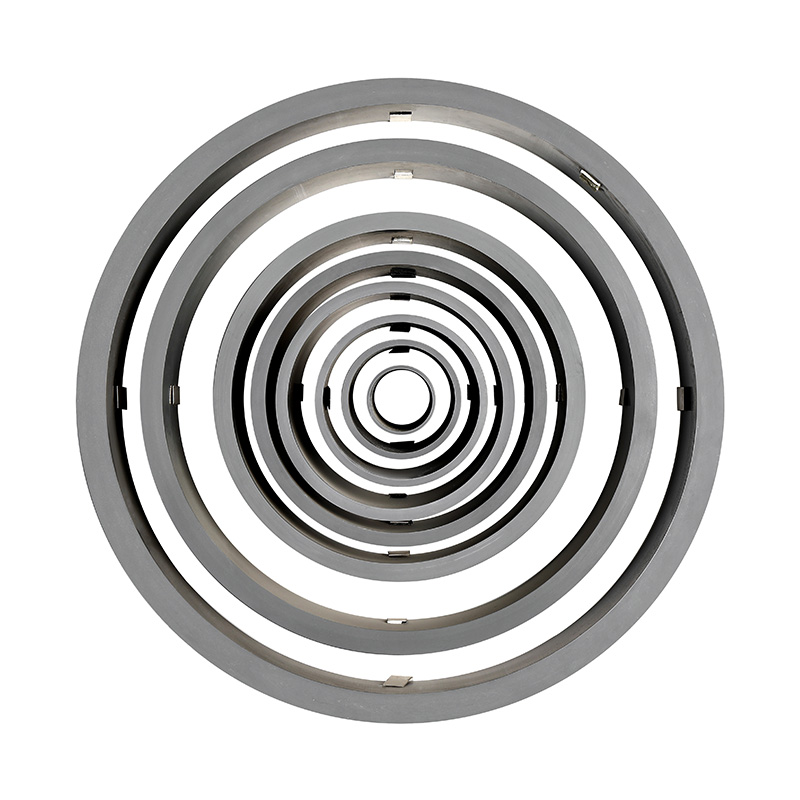 Wholesale PVC-C Pipes DN15-600 GB Standard Suppliers, Factory - Kaixin Pipeline Kaixin Pipeline Technologies Co., Ltd is China wholesale industrial/household PVC-C Pipes DN15-600 GB Standard suppliers and factory,Larg... View Product →
 The takeaway for a specifier is compact. CPVC is a strong, cost-effective choice for corrosive fluids between roughly 140°F and 200°F, but only when every size-dependent and temperature-dependent rating has been verified. Start with the pipe table, apply the chemical caveats, add the surge margin, and let the weakest component set the system's maximum working pressure. A manufacturer that supplies the full range of complete corrosion-resistant piping systems can usually provide the documentation to make that verification straightforward, and that documentation is what turns CPVC's temperature and pressure rating from a marketing number into an engineering one.

 Siège social : No. 539 Bohai Road, district de Beilun, ville de Ningbo, province du Zhejiang, République populaire de Chine
 +86-18067123177